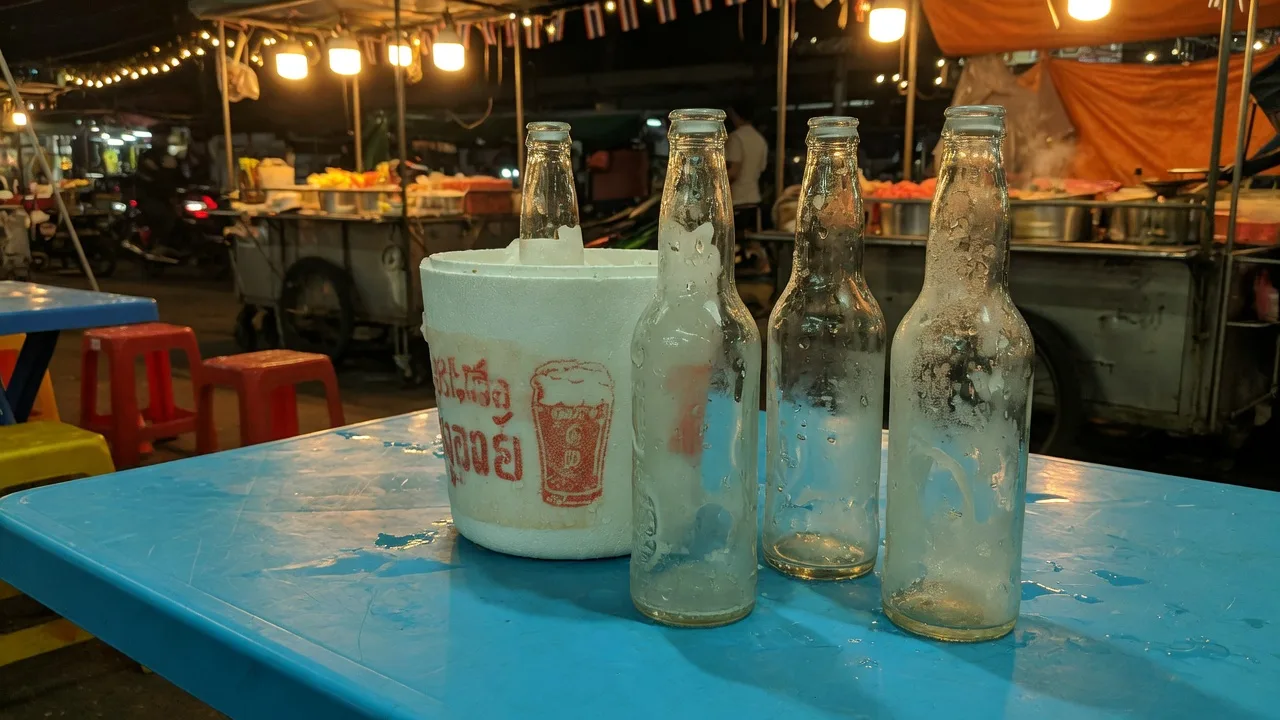
Thailand's alcohol culture is a study in contrasts: a Buddhist country where monks abstain and government campaigns warn of drinking's karmic consequences, yet one where beer, whisky, and lao khao (rice spirit) flow freely at social gatherings, temple festivals, and the extended Thai meal. Alcohol advertising is restricted (no faces shown in ads between 5am–10pm), alcohol sales are prohibited before 11am and between 2–5pm, and Buddhist holidays are declared dry days. Yet Thais drink — socially, enthusiastically, and with a distinctive set of customs. A granite mortar is more use at home than a novelty bottle opener. Granite listings are size menus, so the mortar stays a name. Squid Brand fish sauce, 725 ml on the table is the real condiment. A smaller bottle is a different listing.
Featured local source
Craft sources in Bangkok
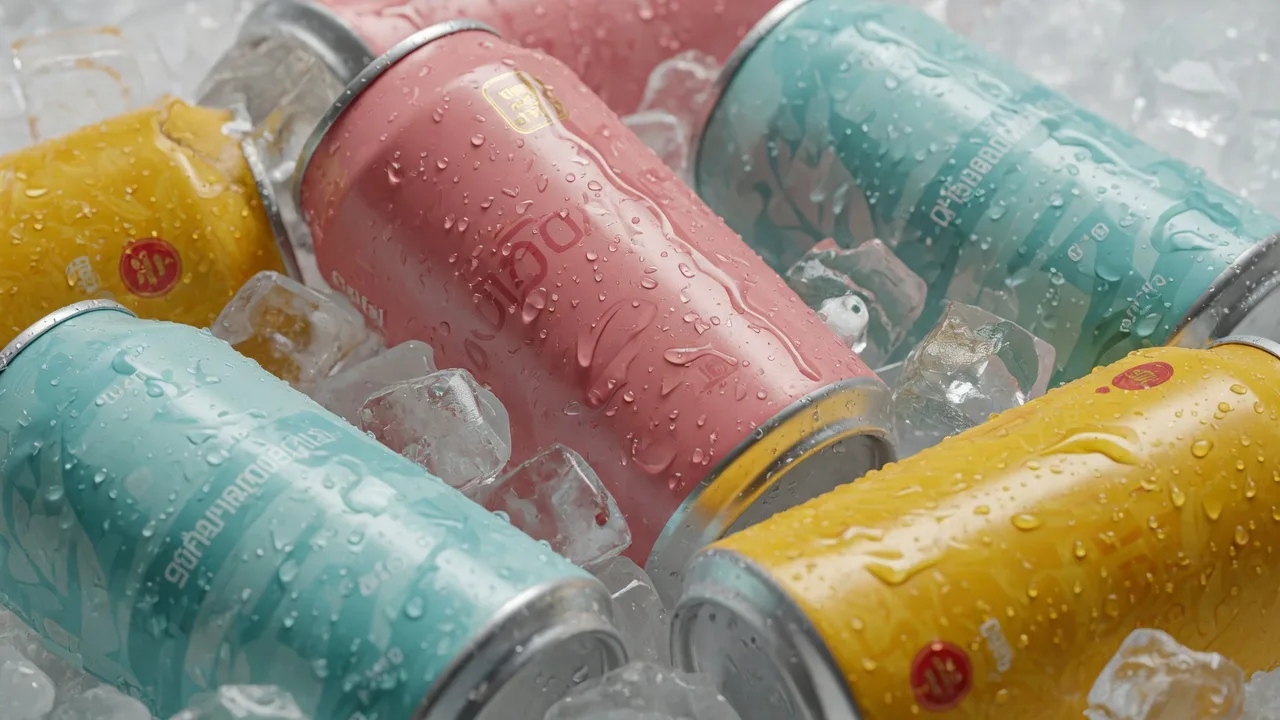
Supermarket lagers and drinking hours belong on this page. For names, ABV, brand sites, and which Thai chains stock a can, use the beer catalogue. The BK Magazine ten-brewers roundup is the map behind several of the craft names below.
The Big Three still dominate ice buckets. The craft list is the names Bangkok beer people actually talk about — not every label that ever appeared on a stale roundup.
Thai Beer
The Big Three
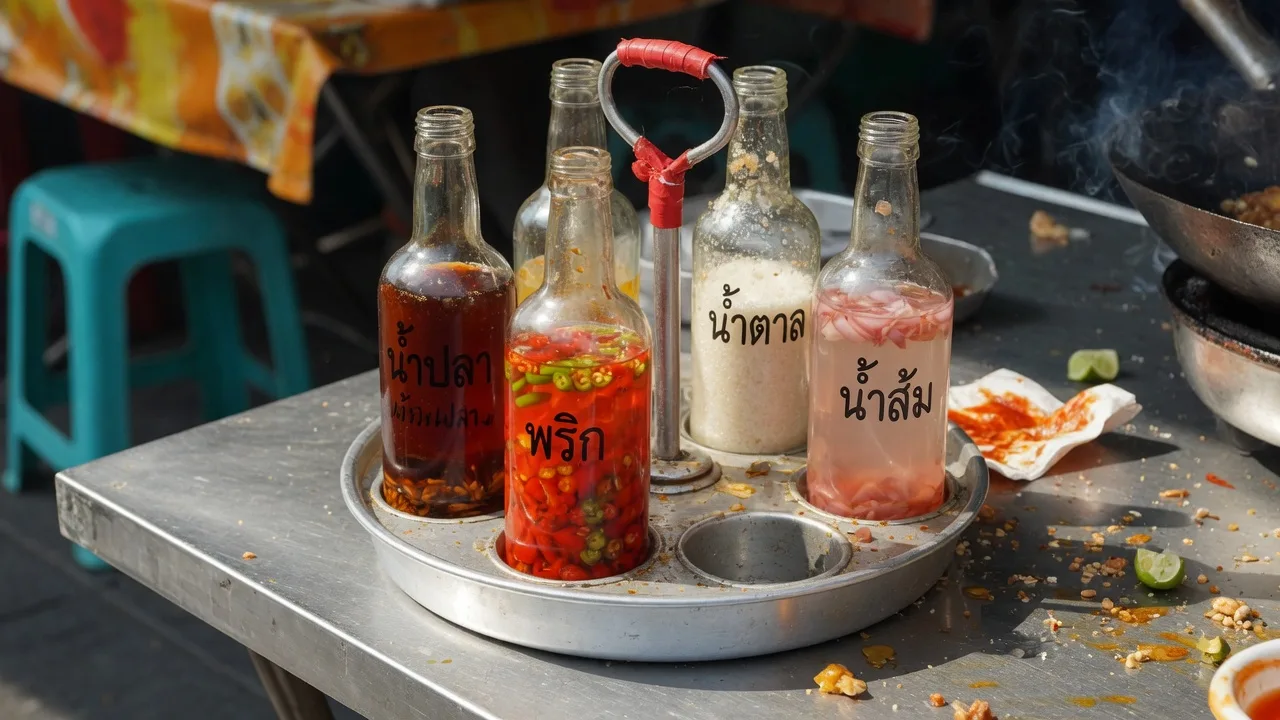
These are the bottles you will actually be poured at a roadside table, a 7-Eleven, or a hotel pool. Learn the logos; the rest of the scene sits on top of them.
| Brand | Brewer | ABV | Character |
|---|---|---|---|
| Singha (สิงห์) | Boon Rawd Brewery (est. 1933) | 5.0% | Thailand's original beer. Full-bodied pale lager, slightly bitter, malty. The premium option. Pronounced "Sing" (not "Sing-ha"). Gold label. |
| Chang (ช้าง) | ThaiBev | 5.0% | The challenger. Clean, slightly sweet lager. Lower-priced than Singha. Green elephant logo. Was 6.4% — reduced in 2014. |
| Leo (ลีโอ) | Boon Rawd Brewery | 5.0% | Boon Rawd's mass-market brand. Lighter, less bitter than Singha. Leopard logo. Often the cheapest option. Thailand's best-selling beer by volume. |
Other supermarket lagers
- Singha Light — Lower-alcohol version (3.5%). Increasingly popular.
- Archa (ThaiBev) — Budget lager. Functional.
- Phuket Lager / Phuket IPA — Island brand with national distribution; a step sideways from the Big Three, not a substitute for Bangkok craft taps.
- Imported beers — Heineken, Tiger, Asahi, and Carlsberg are widely available but more expensive.
Thai brewing law still makes a tiny legal brewery hard. A lot of “Thai craft” is contract-brewed at larger licensed plants (TSI near the Bang Pakong is the name that keeps coming up), or was previously brewed in Vietnam and imported. That is how the scene stays legal. The names below are the ones worth asking for.
Brewers and brands to look for
- ChitBeer — Colonel Wichit “Chit” Saiklao is the name most people use when they explain how Thai craft started. Koh Kret is the pilgrimage tap; Chit Holes have spread through Bangkok, with further rooms in Phuket and Chiang Mai. Devanom’s founders came up through this world.
- Devanom (เทพนม) — Nonthaburi brothers’ project: hop-forward beer, Thai honey mead, and sato (rice wine) treated as a serious drink rather than a novelty. Farm-grown hops, tasting room outside the city.
- Samata Brewing — Fruit-forward, session-strength beers (mango sticky rice is the can tourists photograph). Founder Chote is a regular on the festival circuit. Facilities now in Sai Mai after an earlier Vietnam brewing chapter.
- Baan Bangkok — Hazy IPAs with a local following. No flashy taproom of their own right now; Haze in Chinatown is the usual home bar. Quiet on social, loud in the glass.
- Vana Brewing (formerly the Brewing Project) — Among the easiest Thai craft cans to actually find. Head brewer Ben Chalach; contract-brewed at TSI; lots of collabs.
- Mardi Craft — TSI house/sub-brand. Easy-drinking series (Thai Myth art cans; Music series pilsner / NEIPA / fruit wit). The “I just want a Thai can that isn’t Leo” supermarket cousin of the scene.
- 12 Plato — Bang Na brewpub that installed its own kit in 2023. Same owners later opened Eight Days a Week in Ari.
- Sandport Brewing — 2014-era name; part of the United People’s Brewery grouping that pooled volume so several small brands could stay legal.
- Taopiphop Ale Project — Tao Limjittrakorn: brewer, former illegal-homebrew defendant, now a legal producer and MP. Cans via TSI; the politics and the beer are the same story.
- Mahanakhon (เบียร์มหานคร) — Showing up at SongCraft and bottle drops; another local label to ask for when the fridge is more than Singha.
- Salatan — Newer name on the Chit Terminal calendar (First Storm, 2026).
Where the beer actually is
- Brewave — Not one taproom: a Bangkok bar-and-restaurant group with its own beer plus guests. Locations open and close; as of August 2026 remaining rooms included Gaysorn Amarin, Ratchada, Expedition HQ, Ari × Amazon Experience, and several Plug-In / Cloud 11 sites. Check the door before you trek.
- SongCraft / Lost in Songwat — Chinatown festival circuit for Thai community beers and spirits.
- Hair of the Dog / DogFest, Tawandang German-style houses, Hobs, Bao Cafe (Silom taps), The Commons / Cloud 11 — the diary lives on the events archive, not on this page.
How to use this list: the Big Three are what you will be handed. The names above are what to ask for. Cans, brand sites, and chain fridges: beer catalogue.
Beer Customs
Thai beer drinking is communal and performative:
- Beer is typically ordered in large bottles (630ml) and shared — the host pours for everyone
- Beer is poured over lots of ice — Thai beer is served over ice cubes in short glasses. This horrifies beer purists but makes perfect sense at 35°C.
- The ice also dilutes the beer, making it more sessionable
- At gatherings, one person "controls the bottle" and tops up glasses — letting a friend's glass sit empty is poor form
- Cheers: Chon gaew! (ชนแก้ว) — "clink glasses!"
Craft taps are a different ritual (pint, no ice, often air-con). Do not assume the ice rule at a brewpub; do assume it at a plastic-table som tam stall.
Thai Whisky
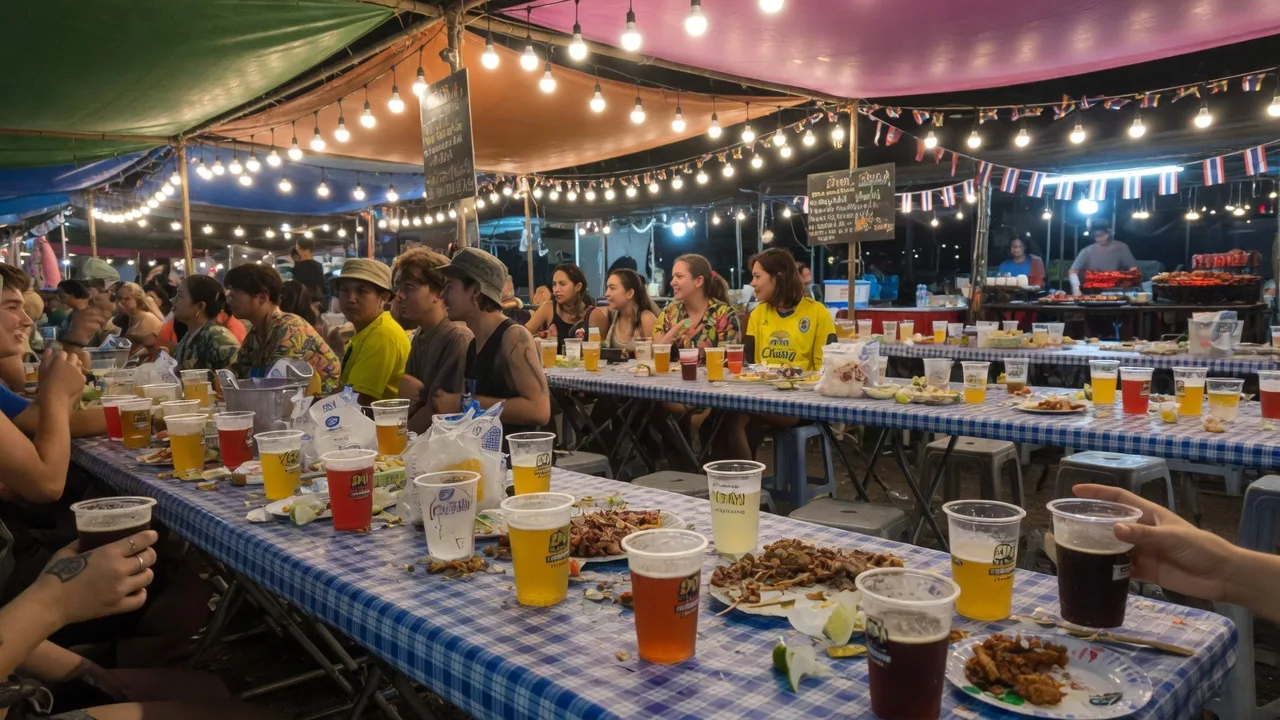
What Thais call "whisky" is more accurately a spirit distilled from sugarcane or rice — closer to rum or soju than Scotch. These spirits dominate Thai drinking culture, especially in rural areas and working-class urban settings.
Mekhong (แม่โขง)
- Thailand's first domestic spirit, launched in 1941 — named after the Mekong River
- 35% ABV
- Rum/spirit made from sugarcane and rice — sweet, smooth, golden
- Marketed internationally as "Thai spirit" rather than whisky
- Mixed with soda (Mekhong soda) or with Coke
- The base for a Sabai Sabai cocktail (Mekhong, lime, soda, sugar) — Thailand's answer to a mojito
Sang Som (แสงโสม)
- Thailand's most popular spirit by far — the default working-class drink
- 40% ABV
- Rum-style spirit from sugarcane
- Sold in massive quantities (estimated 60+ million litres per year)
- Typically mixed with soda and ice at nightclubs, karaoke bars, and village gatherings
- Available in every 7-Eleven (after permitted hours)
- Very affordable: ~200 baht for a 350ml bottle
Hong Thong (หงส์ทอง)
- Another popular sugarcane spirit, slightly smoother than Sang Som
- 35% ABV
- "Golden Phoenix" — marketed as a step up from Sang Som
Lao Khao (เหล้าขาว) — Rice Whisky
- White spirit distilled from fermented rice — Thailand's moonshine equivalent
- Clear, rough, strong (35–40% ABV)
- Made locally and commercially; home-distilled versions are technically illegal but widespread
- Predominantly a rural and working-class drink
- Sold at village markets in recycled bottles or plastic bags
- Acquired taste — the flavour is raw, grainy, and powerful
Sato (rice wine, closer to a rustic sake than to lao khao) is having a craft revival — Devanom and events such as Sato So Good (Beer People) are the current English-language trail. Dates live on the events archive.
Thai Drinking Culture
The Thai Drinking Session
A Thai drinking session (kin lao) follows specific social patterns:
- Shared bottles — whisky or Sang Som is ordered by the bottle, with a bucket of ice, soda water, and glasses. The table controls the pour.
- Snacks are mandatory — Drinking without food is considered unwise and slightly pathetic. Common drinking snacks (gab gaem): fried peanuts, grilled squid (pla meuk yang), som tam, larb, sai krok, fried chicken.
- Music — Karaoke is inseparable from Thai drinking culture. Karaoke bars (ran karaoke) range from modest roadside rooms to luxury private suites.
- Toasting — Frequent, enthusiastic. Chon gaew!
- Pouring — The host or the youngest person at the table pours. Never pour only for yourself.
Drinking and Buddhism
The Fifth Precept of Buddhism is to abstain from intoxicants. In practice, Thai observance is selective — many Thais drink regularly while maintaining Buddhist practice in other areas. On wan phra (Buddhist observance days) and certain holidays (Makha Bucha, Visakha Bucha, Asalha Bucha), alcohol sales are legally banned nationwide. These laws are enforced — 7-Elevens and restaurants will not serve alcohol on these days.
Alcohol Regulation
| Regulation | Detail |
|---|---|
| Legal drinking age | 20 |
| Sale hours | 11:00–14:00 and 17:00–00:00 (convenience stores; restaurants similar) |
| Buddhist holidays | Nationwide ban on alcohol sales on major Buddhist observance days |
| Advertising | Highly restricted — no showing faces drinking, no TV/radio ads during certain hours, prominent health warnings |
| Drunk driving | Illegal (BAC limit 0.05%); penalties are severe on paper but enforcement varies |
| Election days | Alcohol sales banned for 24 hours before and during elections |

Cocktail Culture
Bangkok has become a world-class cocktail city — consistently placing multiple bars in the World's 50 Best Bars list:
- Bamboo Bar (Mandarin Oriental) — Elegant, jazz-accompanied, one of Asia's most famous hotel bars
- BKK Social Club (Four Seasons) — Art deco glamour, innovative Thai-influenced cocktails
- Tropic City — Tiki bar with Thai tropical ingredients
- Teens of Thailand — Gin-focused speakeasy in Chinatown
- Vesper — Consistently ranked among Asia's best; creative cocktails
Thai ingredients increasingly feature in high-end cocktails: lemongrass, galangal, pandan, butterfly pea flower, tamarind, makrut lime, and Thai basil all appear on Bangkok's cocktail menus.
Craft beer and craft cocktails are neighbouring hobbies in this city. For cans and chain fridges use the beer catalogue; come back here for the lager-and-Sang-Som basics.