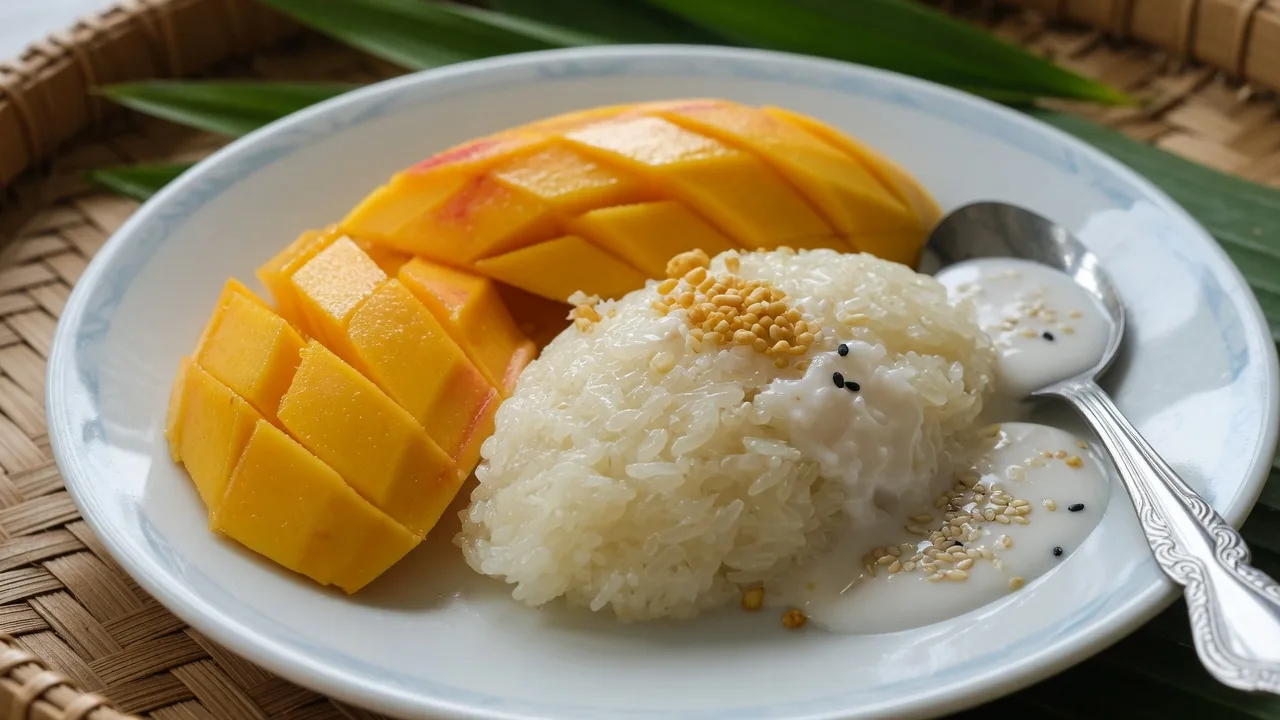
Thai desserts (khanom, ขนม) run from the bluntly simple — mango sticky rice — to royal layered jellies and gold-leaf egg threads. The vocabulary is coconut, glutinous rice, palm sugar, tropical fruit. April is mango season, which is why Songkran tables look as they do. Songkran (13–15 April 2026). Fruit as its own chapter: Tropical fruits.
The icon: khao niao mamuang
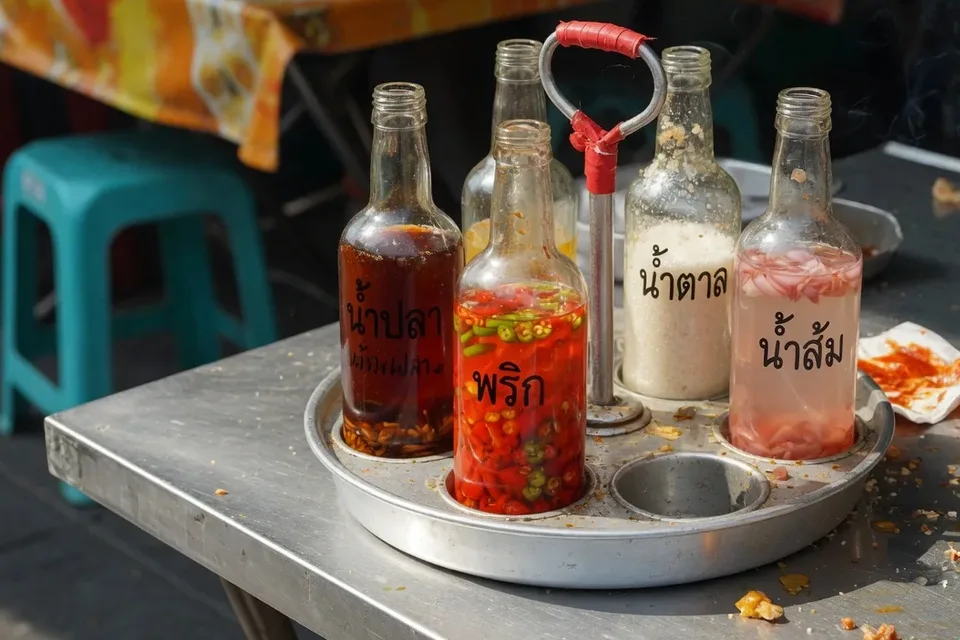
Ripe mango, warm sticky rice soaked in sweetened coconut cream, a thicker coconut drizzle, crispy mung beans.
- Season: March–June is the real window. Off-season specialists source south; peak is still peak.
- Rice: glutinous, coconut, sugar, salt, served warm. Fridge-cold rice is a different, worse food.
- Mango: nam dok mai — golden, silky, fragrant. Other varieties are other desserts.
- Price: street often ฿80–150; tourist streets more. Verify the sign.
- Queues: Mae Varee (Thong Lo) is the famous line; any dedicated cart in season can be excellent.
Sticky rice at home wants an Oungy bamboo steamer, 20 cm, 3 tiers, with a lid. A 2-tier steamer is a different listing. Coconut milk and Thai palm sugar stay names. The mango you cannot post.
Street carts
Itim kati — coconut ice cream from a pushcart, in a cup, a cone, or a hot-dog bun, topped with peanuts, sweetcorn, sticky rice, red beans, jackfruit, condensed milk. Cold coconut plus warm chewy rice is the point. ฿20–40 is the band people quote. Still everywhere; industrial tubs are the threat.
Khanom buang — tiny crispy crêpes, sweet meringue with coconut and foi thong, or savoury shrimp and coriander. Temple-and-market carts.
Khanom krok — hemispheres in a cast-iron pan: rice-flour base, coconut-cream top with onion or corn or taro, crispy bottom, custard top, served as a pair. Morning markets.
Roti — Indian Muslim dough, Thai street now. Banana, egg, Nutella, condensed milk. The stretch-and-flip is the show. Crispy, chewy, too much, correct.
Coconut hall of fame
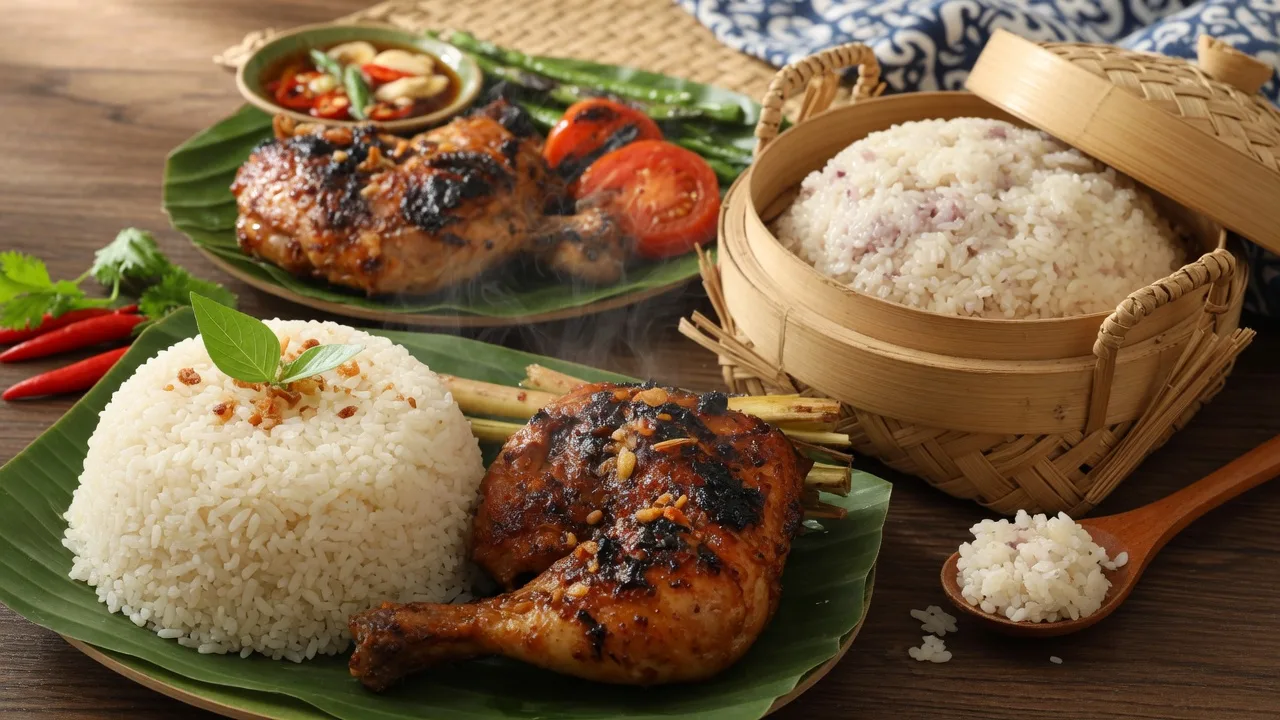
Khanom chan — layered coconut jelly, pandan green and white, each layer steamed. Court patience.
Tub tim krob — water chestnut in red tapioca “rubies,” iced coconut milk, jackfruit. Crunch and cold.
Lod chong — pandan rice-flour worms in iced coconut. Looks wrong, tastes right, shaved ice on hot days.
Bua loi — glutinous-rice balls (white, pandan, pumpkin) in warm coconut cream. Temple fairs, family.
| Dessert | Texture job | Typical street band |
|---|---|---|
| Mango sticky rice | Warm, rich | ฿80–150 — verify |
| Itim kati | Cold + chewy toppings | ฿20–40 |
| Khanom krok | Crisp/custard | Label |
| Khanom buang | Shatter | Label |
| Tub tim krob | Crunch in ice | Label |
| Bua loi | Soft, warm | Label |
Portuguese egg gold
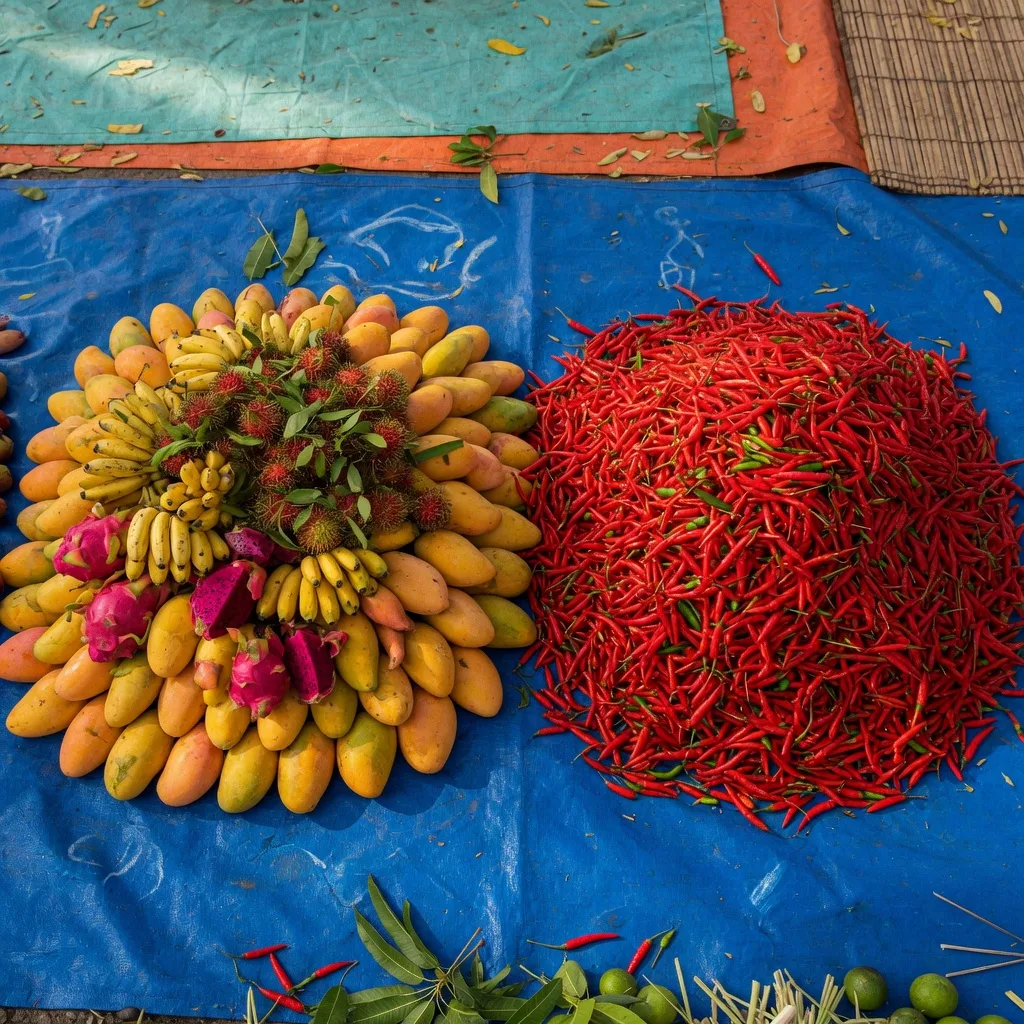
17th-century Ayutthaya court: Maria Guyomar de Pinha (Japanese–Portuguese–Bengali), egg-and-sugar techniques from doces de ovos:
- Foi thong — yolk threads in syrup (fios de ovos). Gold = prosperity. Weddings.
- Thong yip — flower cups. Thong = gold.
- Thong yod — drops. The auspicious trio with the two above.
- Sangkhaya — egg custard, often in a small pumpkin or young coconut, pandan. Eat flesh and custard together.
Ancient kingdoms for the court that employed her. Merit desserts show up at wats; do not photograph a ceremony as a food blog. Temple etiquette.
Market khanom
Banana-leaf packets in a row:
| Dessert | What it is |
|---|---|
| Khanom tom | Glutinous balls, palm-sugar centre, coconut coat |
| Khanom sai sai | Steamed rice flour in leaf, sweet coconut fill |
| Khanom maw gaeng | Baked egg custard, caramel top |
| Khanom ba bin | Thin crispy-chewy coconut rounds |
| Khanom tuay | Two-layer cups: pandan base, coconut cream top |
| Woon | Jellies: coconut, pandan, butterfly pea, fruit |

Cafés, now
Thai tea crêpe cake, mango sticky rice as cheesecake, pandan chiffon, durian cream crêpes, kakigori. Bangkok takes dessert seriously. Fusion plates are a different sport from a ฿30 krok on the way to the BTS. Both can be good. Neither replaces nam dok mai in May.
Chiang Mai’s night bazaar will sell roti and ice cream until the stalls stack. Island carts follow the ferry: Samui and Phuket have the bun-and-peanut version; a last-pier shop may only have jelly cups. Plan the icon for towns in mango months; plan Mama and a mango cup for the boat. Night markets.
Durian is a fruit first and a cream filling second. If you cannot stand the smell, do not start with a crêpe that hides it. If you can, the season (often mid-year, varies by orchard) is when the flesh is the dessert and the sugar is optional. Tropical fruits.
7-Eleven jelly cups and dried mango are bus food, not khanom. 7-Eleven meals. First week: it is allowed to eat mango sticky rice before you have “earned” a street PhD. First week.
Loy Krathong (24 November 2026) is lights on water, not a dessert festival, but market stalls that night will still sell bua loi. Songkran (13–15 April 2026) is the mango-and-khao chae overlap. Loy Krathong.
How you pay: a cart wants cash in small notes. A mall café wants the card. Do not send a layered khanom chan back because it is “not sweet enough”; Thai sweets are often less sugary than a British pudding, and coconut salt is doing work. How to order.
A carbon steel wok will not make foi thong. The egg threads want a tall syrup pot and a steady hand. Buy them. Cook the sticky rice.
Next
Tropical fruits, Street food, Night markets, How to order, Songkran.