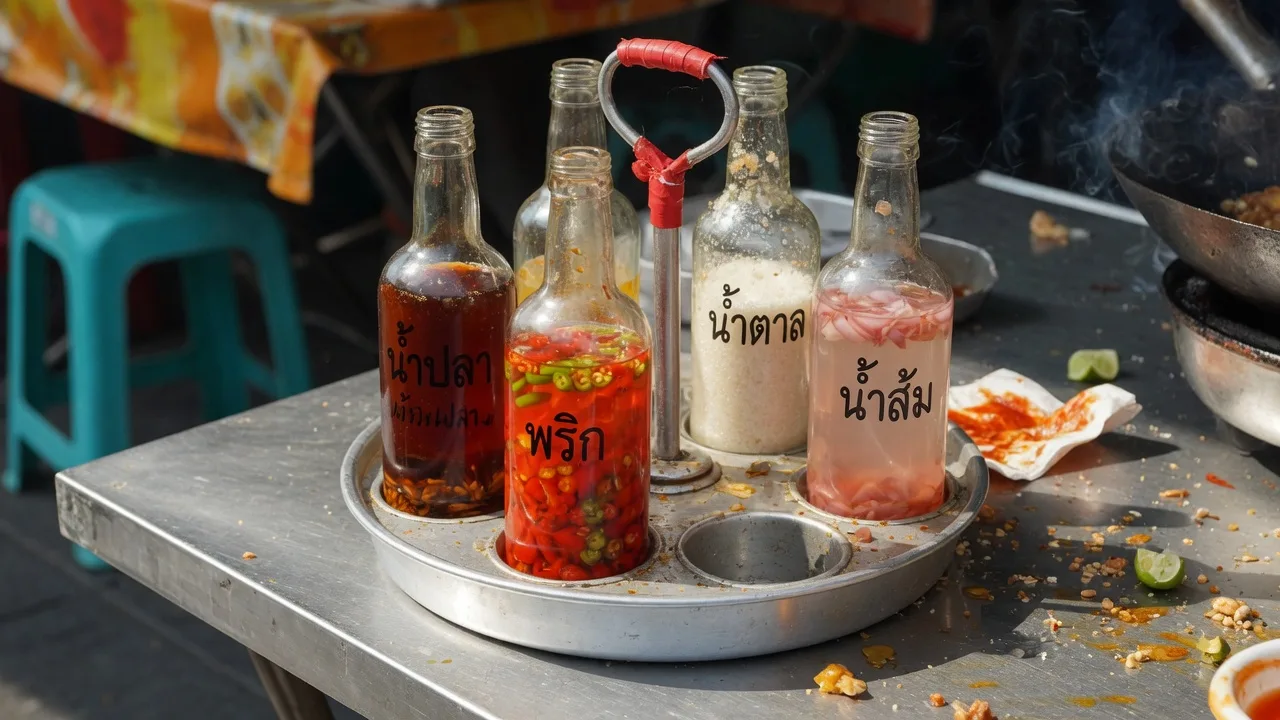
A Thai cook seasons in the wok. The condiment tray is how each diner finishes. Using it is not an insult and it is not a complaint. Sending a dish back because it is “not spicy enough” is the insult. The caddy was already on the table.
The tray is part of the recipe
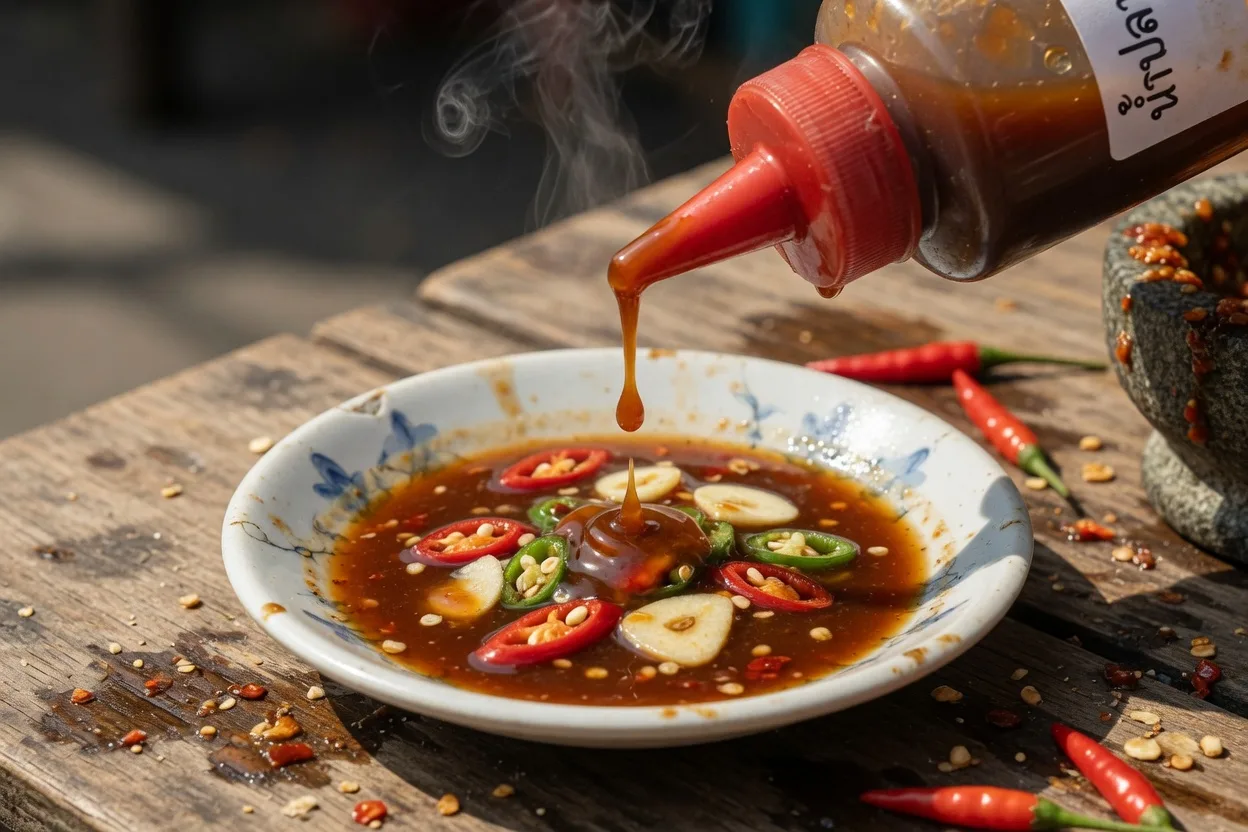
Noodle shops put the tray down before the bowl. Rice-and-curry shops expect you to know it is there. A tourist restaurant may hide it until you look needy. Ask. Or look at the next table.
The usual four:
| Jar | Thai | What it does |
|---|---|---|
| Fish sauce + fresh chilli | nam pla prik / prik nam pla | Salt and a wet heat; the default upgrade |
| Dried chilli flakes | prik pon | Dry, slightly smoky heat; easy to overdo |
| Sugar | nam tan | Rounds sour soups and pad thai; not a dessert move |
| Vinegar + chilli | nam som prik | Brightens noodles; cuts fat |
That set is the national gearbox. You add in small hits and taste. You do not empty the fish-sauce jar as a personality.
Nam prik is a different object: a chilli relish (often with shrimp paste, garlic, lime, sometimes minced pork or veg) served as a dish with vegetables and fish, not a table sprinkle. Nam prik pao is the chilli jam in a jar — sweet, roasted, the colour of a brick — that turns up in tom yum and on toast in student kitchens. Do not confuse the caddy with the relish. One is a toolkit. The other is dinner.
At home, a granite mortar and pestle is how som tam and a lot of nam prik get made. Granite listings are size menus, so the mortar stays a name. The plastic table already did that work. Your job is the four jars, starting with Squid Brand fish sauce, 725 ml, one bottle. A smaller bottle is a different listing.
Heat ladder (relative, not a lab)
We are not inventing Scoville numbers. This is a diner’s ladder: how the thing feels in a normal bowl, relative to the others.
Bird’s eye (prik kee noo) is the one in som tam and in the fish-sauce jar. Small, green or red, no sense of proportion. Spur chilli (prik chee fa) is the longer one in stir-fries — colour, medium heat. Dried red goes into pastes and nam prik pao. Prik yuak is pale, mild, stuffed or fried; it is not the dare.
Isan and the south run hotter as a kitchen habit. Central court-style food is more balanced. If a dish arrives gentle, the tray is how you opt in. If it arrives as a warning, sugar and a lot of rice are how you opt to survive. Rice is the centre — How to order.
Phrases that actually work:
- Mai phet — not spicy. Still not a guarantee at a rural Isan stall.
- Phet nit noi — a little spicy.
- Phet mak — very spicy, said only if you mean it.
Neither phrase is a legal contract. The tray remains.
Caddy how-to, dish by dish
Noodles (kuay tiao, pad thai if the stall even gives you a tray). Vinegar first if it tastes flat. Fish-sauce chilli if it tastes shy. Sugar on pad thai if the tamarind is all edge. Flakes last.
Soups (tom yum, tom kha, boat noodles). A drop of prik nam pla can help a timid bowl. Sugar is traditional in some sour soups. Do not chilli-bomb a coconut soup into a dare; you will only taste chilli.
Rice dishes (khao pad, khao kha moo, pad krapow). Prik nam pla on the side of the plate, not drowned through the rice. The fried egg is a damper.
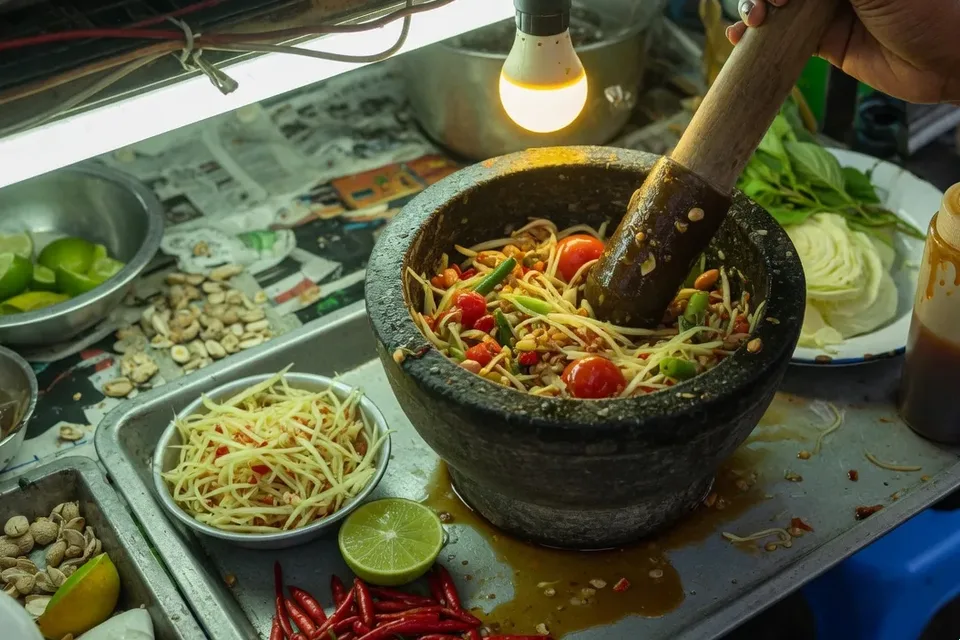
Som tam and larb. The mortar already happened. Extra flakes are bravado. Cucumber and sticky rice are the official fire extinguishers. A granite mortar at home is for later; do not ask the stall to “make it British”.
Nam prik as a dish. Spoon a little, eat with veg. It is salty and intense on purpose. It is not a pasta sauce.
7-Eleven will sell you dried chilli and a bottle of fish sauce if you are building a hotel caddy. That is a slightly lonely project and a valid one on a long stay. For a single night, use the table’s jars. Rice boxes do not come with a caddy; they come with a plastic fork. 7-Eleven meals.
What not to do
Do not send the bowl back because you wanted it hotter; that is what the tray is for. Do not send it back because you wanted it milder unless it is actually inedible — then be specific and quiet, not theatrical. The social register is Kreng jai.
Do not assume “chilli on the side” means the paste in the curry is mild. Paste is cooked in. The tray is extra.
Do not put fish sauce on everything as a British salt reflex. Taste first. Some dishes are already salted for a Thai table.
Vegetarian diners: prik nam pla is fish sauce. The flakes might be just chilli. The vinegar might be just vinegar. Ask. Vegetarian and vegan.
The tray is the opposite of a secret. It is sitting there. Use it like the person at the next stool: a little, then a little more, then rice.