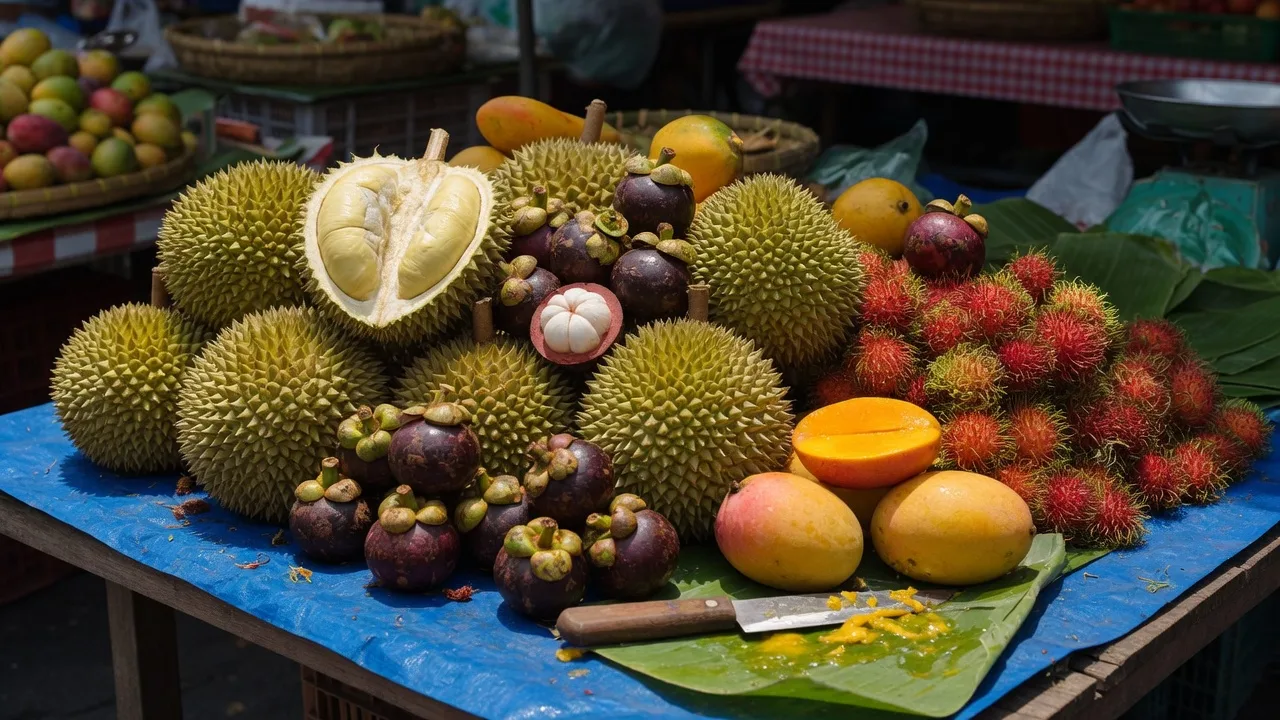
Thailand is one of the world's great fruit countries. The tropical climate, abundant water, and rich soil produce a staggering variety of fruits — many of which are unknown outside Southeast Asia. Thai fruit is not just eaten — it is an art form. The ability to carve fruit into elaborate floral arrangements is a traditional court art, and the seasonal arrival of fruits like durian and mango is anticipated with the enthusiasm other cultures reserve for wine vintages.
The King and Queen
Durian (ทุเรียน) — The King of Fruits
Durian is Thailand's most famous, most expensive, most controversial, and most beloved fruit. Its smell — described variously as rotting onions, turpentine, raw sewage, and sweet custard — is so powerful that it is banned from hotels, airlines, and the Bangkok BTS/MRT. The taste, for those who can push past the aroma, is rich, creamy, and deeply complex — like custard with notes of almond, vanilla, and garlic.
| Fact | Detail |
|---|---|
| Season | April–June (main), September–November (second crop) |
| Best varieties | Monthong (Golden Pillow — most popular), Chanee, Kan Yao (Long Stem — connoisseur's choice), Puang Manee |
| Price | 100–600 baht/kg depending on variety and season. Premium Kan Yao can reach 1,500+ baht/kg. |
| Export value | Thailand exports US$3.5 billion+ of durian annually (2023), mostly to China |
| Where to eat | Fruit markets everywhere in season; Or Tor Kor Market (Bangkok) for premium; Chanthaburi is the durian capital province |
| Etiquette | Eat outdoors. Don't bring it into air-conditioned spaces. Don't mix with alcohol (a common Thai belief, though scientifically debated). |


Mangosteen (มังคุด) — The Queen of Fruits
If durian is the king, mangosteen is the queen — elegant, refined, and universally loved. A thick purple rind cracks open to reveal snow-white segments that taste like a perfect balance of sweet and tart — lychee meets peach meets raspberry.
- Season: May–September
- Selection: Choose fruit with a slightly soft rind (not rock-hard) and green stem
- Stain warning: The purple rind produces an indelible dye. Do not wear white while eating mangosteen.
The Stars
Mango (มะม่วง)
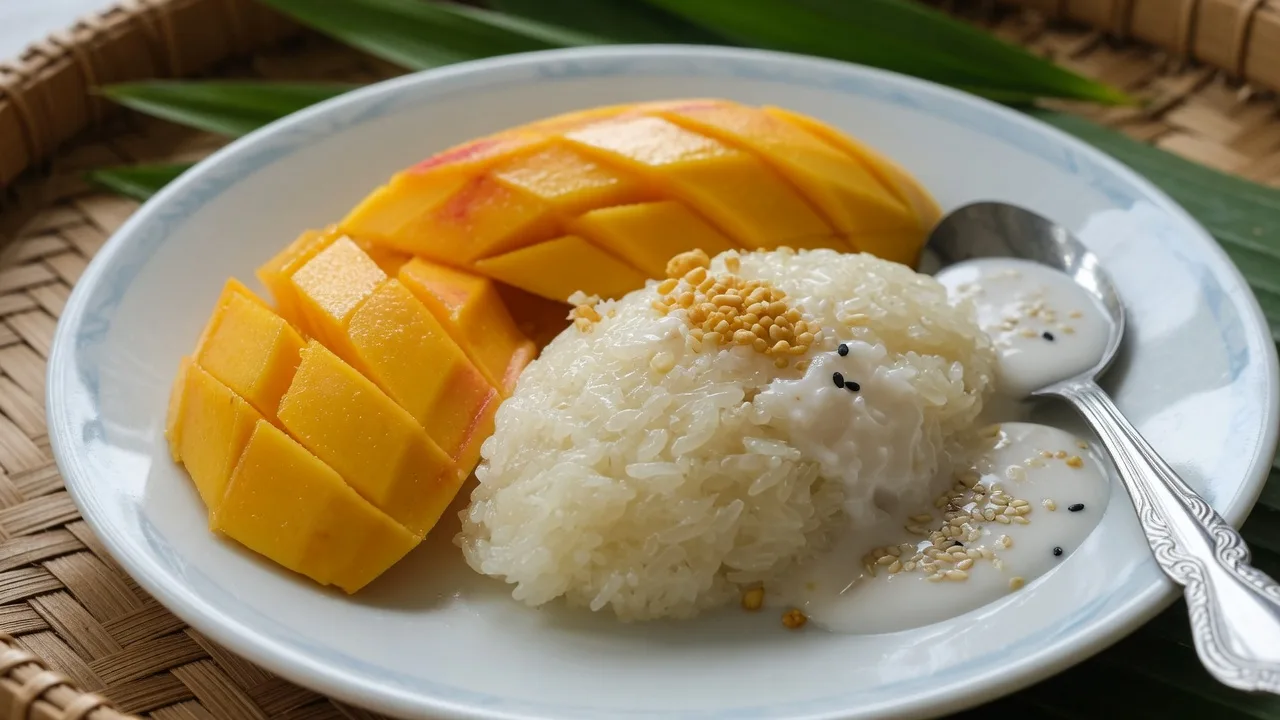
Thai mangoes are among the world's finest. The most prized is nam dok mai (น้ำดอกไม้) — the golden, silky-fleshed mango used in khao niao mamuang (mango sticky rice).
- Ripe season: March–June
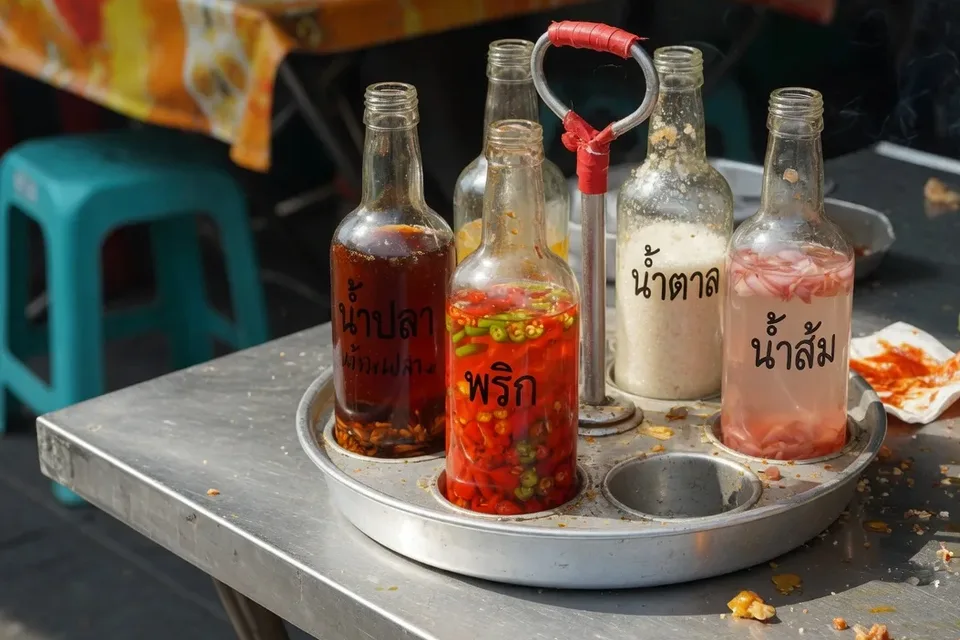
- Green (unripe) mangoes are eaten year-round — sliced, with a dip of chilli, sugar, and salt (prik kap kleua). This sweet-sour-spicy-salty combination is quintessentially Thai.
- Other varieties: ok rong (smaller, intense flavour), keaw (green-skinned, sweet), mahachanok (elongated, export variety)
Rambutan (เงาะ)
Hairy red fruit hiding translucent white flesh around a seed. Sweet, juicy, lychee-like but less fragrant. Season: May–September. Sold in massive bunches at roadside stalls for very little money.
Longan (ลำไย)
Small, brown-skinned fruit with translucent, sweet flesh. Called lam yai in Thai. Chiang Mai and Lamphun are the longan capitals — the northern harvest in July–August is a major agricultural event. Eaten fresh, dried (as a sweet snack), or steeped in syrup.
Pomelo (ส้มโอ)
Thailand's grapefruit equivalent — but sweeter, less bitter, and much larger. Pink or white flesh, eaten fresh or in yam som-o (pomelo salad with shrimp and coconut). Nakhon Pathom is famous for its pomelo orchards.
Lychee (ลิ้นจี่)
Grown primarily in the north (Chiang Mai, Chiang Rai). Season: April–June. Sweet, fragrant, delicate. Often eaten chilled. Thai lychees are smaller and more aromatic than Chinese varieties.
Dragon Fruit (แก้วมังกร)
Stunning fuchsia-skinned fruit with white or red flesh speckled with tiny black seeds. Mild, subtly sweet flavour. Grown across Thailand but particularly in the sou
th and east. Available year-round. The red-fleshed variety is sweeter and stains everything.
Jackfruit (ขนุน)
The world's largest tree fruit — a single jackfruit can weigh 30 kg. The flesh is yellow, chewy, and intensely sweet with a flavour somewhere between banana, pineapple, and bubblegum. Also used unripe in curries (like a vegetable). Seeds are roasted and eaten as a snack.
Papaya (มะละกอ)
Ubiquitous in two forms:
- Ripe: Orange-fleshed, sweet, eaten for breakfast or as dessert
- Green (unripe): The raw material for som tam — shredded and pounded into salad. Green papaya has no sweetness — it's a crunchy, neutral vehicle for dressing.
The Hidden Gems
| Fruit | Thai | Description |
|---|---|---|
| Rose apple (chom phu) | ชมพู่ | Bell-shaped, crispy, watery, mildly sweet. Eaten as a refreshing snack, often with a salt-chilli dip. |
| Salak / Snake fruit (sala) | สละ | Brown, scaly skin (hence "snake fruit"). Sweet-tart, crunchy flesh. |
| Langsat / Longkong | ลองกอง | Clusters of small, translucent fruits with sweet-sour flesh. Southern Thailand specialty. |
| Custard apple (noi na) | น้อยหน้า | Green, bumpy exterior hiding creamy, sweet white flesh with black seeds. Tastes like vanilla custard with a granular texture. |
| Star fruit (ma feuang) | มะเฟือง | Star-shaped cross-section. Tart-sweet, juicy. Often used in juice. |
| Santol (krathon) | กระท้อน | Fuzzy brown exterior, sweet-sour white flesh. A love-or-hate fruit. |
| Tamarind (makham) | มะขาม | Sweet tamarind pods are eaten as candy. Sour tamarind paste is a key cooking ingredient. |
| Guava (farang) | ฝรั่ง | Crunchy, mild, often dipped in a chilli-sugar-salt mix. The Thai word for guava (farang) is the same word used for "foreigner." |
| Sapodilla (la mut) | ละมุด | Brown, grainy-textured flesh with a caramel/brown sugar flavour. Looks unimpressive; tastes wonderful. |
| Coconut (maprao) | มะพร้าว | The foundation fruit — coconut water, coconut milk, coconut cream, coconut sugar. Not just a fruit but an entire ingredient system. |
How Thais Eat Fruit
- Fresh cut from vendors — Pineapple, watermelon, mango, guava, papaya sold peeled and cut in bags. Often with a small sachet of prik kap kleua (chilli-salt-sugar dip).
- Shaved ice — Fresh fruit with shaved ice and sweet syrup
- Shakes and juices — Every market has fruit shake vendors (nam pon lamai)
- Fruit carving — An ancient court art. Elaborate floral and animal designs carved from melons, papayas, and pumpkins displayed at hotels and royal events
- Seasonal eating — Thais eat fruit by season. The arrival of durian season (April–May) is a genuine cultural event.
Fruit Markets
| Market | Location | Notes |
|---|---|---|
| Or Tor Kor | Bangkok (next to Chatuchak) | Thailand's premier fresh-produce market. Premium durian, mangosteen, mangoes. Immaculate. Air-conditioned section. |
| Talat Khlong Toey | Bangkok | Bangkok's largest wholesale fresh market. Chaotic, authentic, incredible fruit selection. |
| Maeklong Railway Market | Samut Songkhram | The famous "train market" — fruit stalls that fold up when the train passes. |
| Warorot Market | Chiang Mai | Northern fruit: longan, lychee, strawberries from the highlands. |
| Roadside stalls | Everywhere | The best fruit is often the cheapest — bought from the back of a pickup truck on a provincial road. |