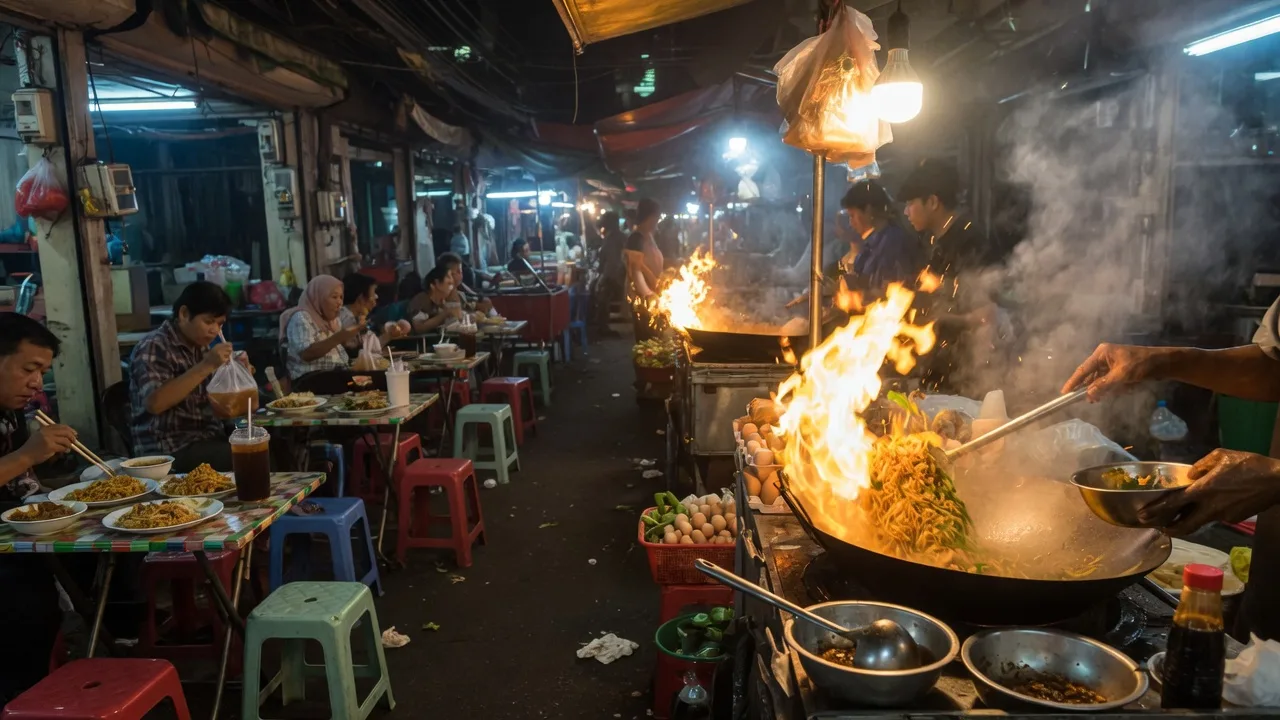
Thailand's street food culture is the most celebrated on the planet. In Bangkok alone, an estimated 300,000 street vendors serve food from pavement stalls, pushcarts, shophouses, and folding-table restaurants — from before dawn until deep into the night. Street food is not cheap eating for people who can't afford restaurants. It is the national dining room. Bank executives, students, truck drivers, and tourists eat side by side on plastic stools at roadside stalls that have been perfecting a single dish for three generations.
When Jay Fai — a 70-year-old woman cooking in goggles over a charcoal flame on a Bangkok pavement — received a Michelin star in 2018, it was international recognition of what Thais already knew: the best food in the country has always been on the street.
How Street Food Works
Specialisation
The fundamental difference between Thai street food and Western restaurant culture: most street vendors cook one thing, or a small family of related dishes. The som tam lady makes som tam. The grilled chicken man grills chicken. The noodle boat serves noodles.
This specialisation means decades of refinement. A vendor who has made the same pad thai 400 times a day for 20 years has achieved a level of mastery no generalist kitchen can match.
Ordering
- Point at what you want — many stalls display ingredients
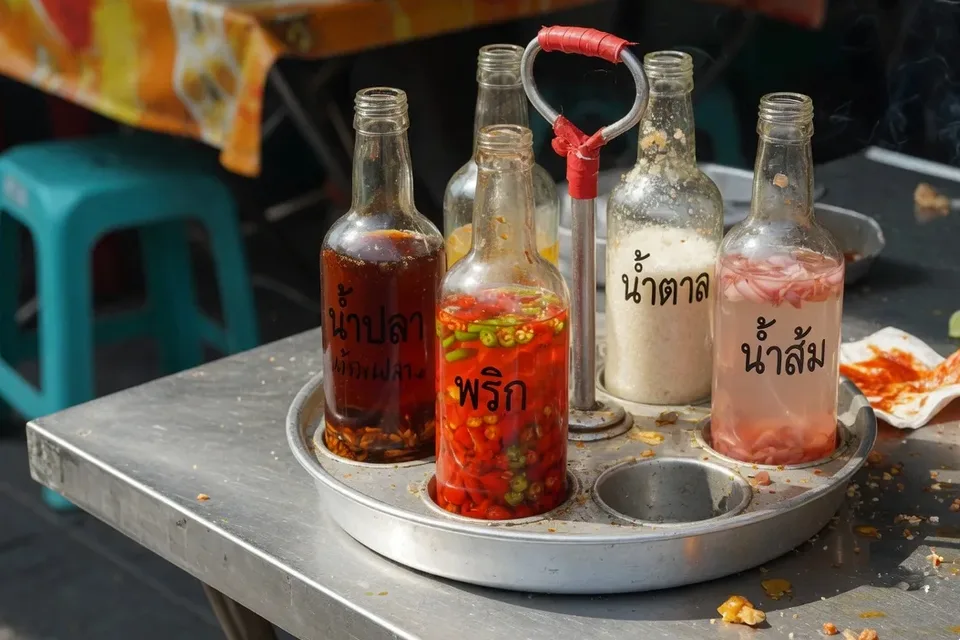
- State preferences: mai phet (not spicy), phet nit noi (a little spicy), phet mak (very spicy)
- Noodle shops ask you to choose: noodle type → broth → toppings
- Rice-and-curry shops (ran khao gaeng): point at pre-made dishes in trays; they're spooned over rice. Choose 1–3 dishes per plate
- Prices are usually unlisted but consistent: 40–80 baht for most street dishes (2026 prices)
Hygiene
Thai street food is generally safe — the high turnover, fresh cooking, and intense heat of a carbon steel wok provide reasonable food safety. Practical tips:
- Eat where Thais eat — a busy stall with constant turnover is safer than an empty one
- Watch the cook — is the workspace visibly clean? Is raw and cooked food separated?
- Avoid lukewarm — freshly cooked or piping hot is ideal. Pre-made dishes sitting in the sun for hours are riskier.
- Ice is usually safe — machine-made tube or crescent ice (with a hole through the middle) is produced in factories with filtered water
- Peel fruits — or let the vendor peel them for you
- Carry hand sanitiser — most stalls don't have handwashing facilities
Bangkok's Essential Street Food
The Must-Eat Dishes
| Dish | What to Look For | Price Range |
|---|---|---|
| Pad thai | A vendor with a hot wok, making individual portions. Prawns, tofu, egg, bean sprouts, peanuts, lime. | 50–100 ฿ |
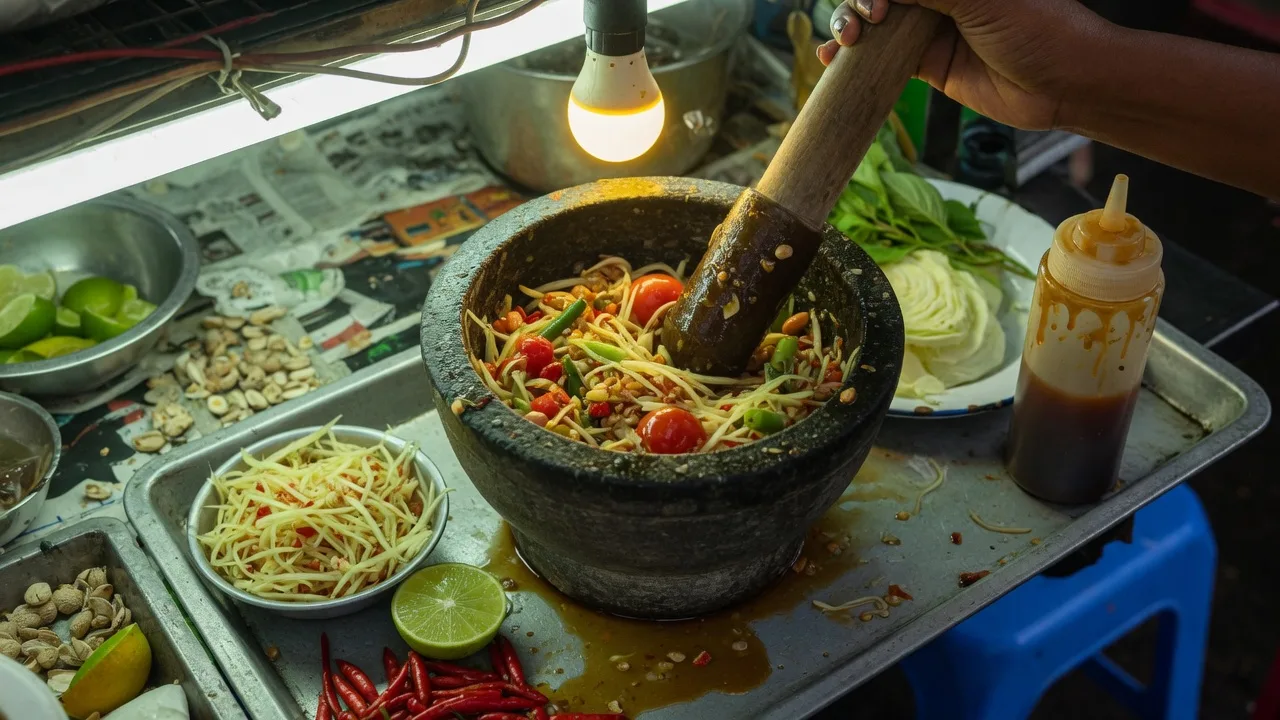
| Som tam | The mortar-and-pestle setup. Watch them pound. Request your spice level clearly. | 40–60 ฿ |
| Gai yang + sticky rice | Butterflied chicken over low coals. Smoky, juicy. Always paired with som tam. | 40–80 ฿ |
| Pad krapao + fried egg | Minced pork/chicken stir-fried with holy basil and chillies, over rice with a crispy-edged fried egg. Thailand's most ordered dish. | 50–70 ฿ |
| Boat noodles (kuay tiao reua) | Small bowls of dark, rich, intense noodle soup (originally served from boats in the canals). Usually 15–25 baht per tiny bowl — eat 3–5. | 15–25 ฿/bowl |
| Khao man gai | Hainanese chicken rice — poached chicken on fragrant rice with ginger-chilli sauce. Simple perfection. | 50–70 ฿ |
| Khao kha moo | Braised pork leg on rice with a pickled-garlic boiled egg. Rich, unctuous, Chinese-Thai comfort food. | 50–80 ฿ |
| Moo ping | Grilled pork skewers — sweet, smoky, served with sticky rice. The breakfast of the working class. | 10–15 ฿/stick |
| Roti | Fried flatbread with banana, egg, condensed milk. Or savoury with curry. Originally Indian-Muslim, now fully Thai. | 30–60 ฿ |
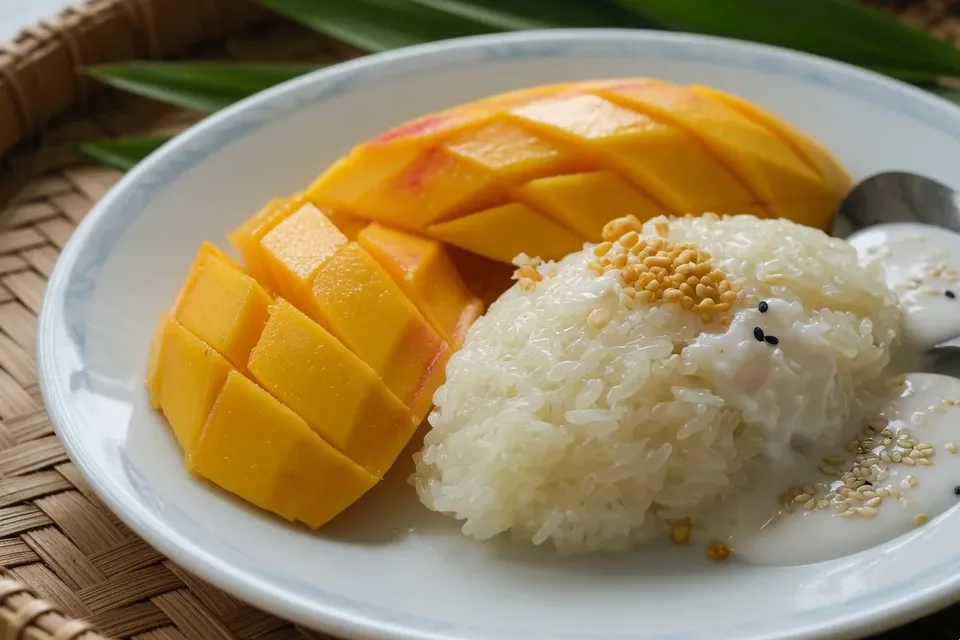
| Mango sticky rice (khao niao mamuang) | Ripe mango sliced onto coconut-cream sticky rice. The dessert that needs no improvement. Seasonal (March–June is peak mango). | 80–150 ฿ |
By Time of Day
Breakfast (6–9 AM)
- Jok — rice porridge with pork, egg, ginger
- Patongo — Thai fried dough sticks (like Chinese you tiao) with sweetened condensed milk or coffee
- Moo ping + sticky rice — grilled pork skewers
- Khao tom — rice soup, lighter than jok
Lunch (11 AM–1 PM)
- Ran khao gaeng — rice-and-curry shops (the Thai working lunch)
- Pad krapao — holy basil stir-fry over rice
- Kuay tiao — noodle soup from any of Bangkok's thousands of noodle shops
- Khao man gai — chicken rice
Afternoon snack (2–5 PM)
- Khanom — Thai sweets and snacks from cart vendors
- Fresh fruit — pineapple, mango, pomelo, watermelon, guava, sold cut and bagged with a sachet of chilli-sugar-salt dip
- Kanom krok — coconut milk pancakes from a special cast-iron pan
- Itim kati — coconut ice cream from a pushcart, served in a bun or with toppings
Dinner & Night (6 PM onwards)
- Night market stalls — full range of grilled meats, seafood, pad thai, etc.
- Khao pad — fried rice (a reliable late-night option)
- Guay jab — rolled rice noodle soup with pork offal, peppery broth
- Jok returns — the porridge shops often reopen late for post-drinking crowds
Bangkok's Famous Street Food Areas
| Area | Character |
|---|---|
| Yaowarat (Chinatown) | Bangkok's most celebrated food street. Seafood, braised duck, Chinese-Thai dishes. Best at night — the entire street becomes a restaurant. |
| Khao San Road | Tourist-oriented but genuine: pad thai, fried insects, fresh juices, grilled seafood. Higher prices. |
| Victory Monument | Major commuter hub surrounded by boat noodle alleys, pad thai stalls, and fast-turnover vendors. |
| Bang Rak / Silom Soi 20 | Lunchtime workers' stalls. Some of the best khao gaeng (rice and curry) in Bangkok. |
| Ari | Trendy neighbourhood with a mix of hipster cafés and excellent traditional stalls. |
| Wang Lang Market | Near Siriraj Hospital, across the river. A classic Thai food market with outstanding kanom (desserts). |
| Ratchawat Market | True locals-only morning market. Outstanding khanom jeen (rice noodles with curry). |


Beyond Bangkok
- Chiang Mai — Warorot Market and the Saturday/Sunday Walking Streets — northern sausages (sai oua), khao soi, and Lanna snacks
- Phuket Old Town — Outstanding khanom jeen, mee hokkien (Hokkien noodles), and Peranakan-influenced street food
- Khon Kaen — The Isan heartland's street food is aggressively flavoured and absurdly cheap
- Trang — Legendary morning market culture, dim sum trolleys, and roast pork
- Ayutthaya — Roti Sai Mai — Shredded candy floss wrapped in thin roti — a beloved Ayutthaya specialty found nowhere else
The Economics
Street food keeps Thailand affordable:
- A filling street meal costs 40–80 baht (roughly £1–2 / US$1.10–2.30)
- Many Thais eat all three meals from street vendors — it's cheaper than cooking at home (when you factor in fuel, ingredients, and the tiny kitchens in Bangkok apartments)
- Vendors typically earn 15,000–30,000 baht/month — modest but sustainable
- Famous stalls (Jay Fai, Thip Samai) can earn multiples of that
Threats and Changes
Bangkok's legendary street food culture faces pressures:
- City regulations — The Bangkok Metropolitan Administration has periodically cracked down on pavement vendors, clearing major streets. Significant vendor relocations occurred in 2017–2018, drawing international criticism.
- Hygiene campaigns — Pressure to formalise food safety standards creates compliance costs that small vendors struggle with
- Rising rents — Prime pavement spots increasingly command significant "key money" or informal fees
- Generational change — Young Thais are less willing to endure the gruelling 12-hour days of street vending
For now, the culture endures — and any rumours of its demise are greatly exaggerated. Bangkok's streets still offer the most democratic, delicious, and affordable dining experience on Earth.